
Making your first $1,000 on Etsy can feel overwhelming when you’re starting from zero.
You may have a great product idea, but that alone doesn’t guarantee sales. Your Etsy shop needs to look trustworthy, your listings need to make people want to click, and your overall customer experience needs to make buyers feel comfortable placing an order.
The good news is that you don’t need a huge inventory or thousands of followers to get started.
You need a well-presented Etsy shop, products people actually want, strong listing photos, clear descriptions, good customer service, and consistent effort.
In this guide, we’ll walk through the key steps you can use to work toward your first $1,000 in Etsy sales.
Can You Really Make $1,000 on Etsy?
Yes, it is possible to build an Etsy business that generates $1,000 in sales. However, there is no guaranteed method or fixed timeline.
Your results will depend on factors such as your product, pricing, demand, competition, listing quality, customer experience, and how consistently you promote your shop.
Instead of looking for a shortcut, focus on building a shop that gives potential customers a reason to trust you and buy from you.
For example, if your average order value is $25, you would need approximately 40 orders to reach $1,000 in revenue.
If your average order value is $50, you would need approximately 20 orders.
That simple calculation can make the goal feel much more achievable.

Step 1: Build an Etsy Shop That Looks Trustworthy
Before worrying about getting hundreds of visitors, make sure your shop is ready for those visitors.
Imagine clicking on an Etsy shop and seeing:
- No shop banner
- Poor-quality product photos
- Almost no information about the seller
- Incomplete policies
- Unclear product descriptions
- Different-looking images for every product
Would you feel comfortable buying?
Probably not.
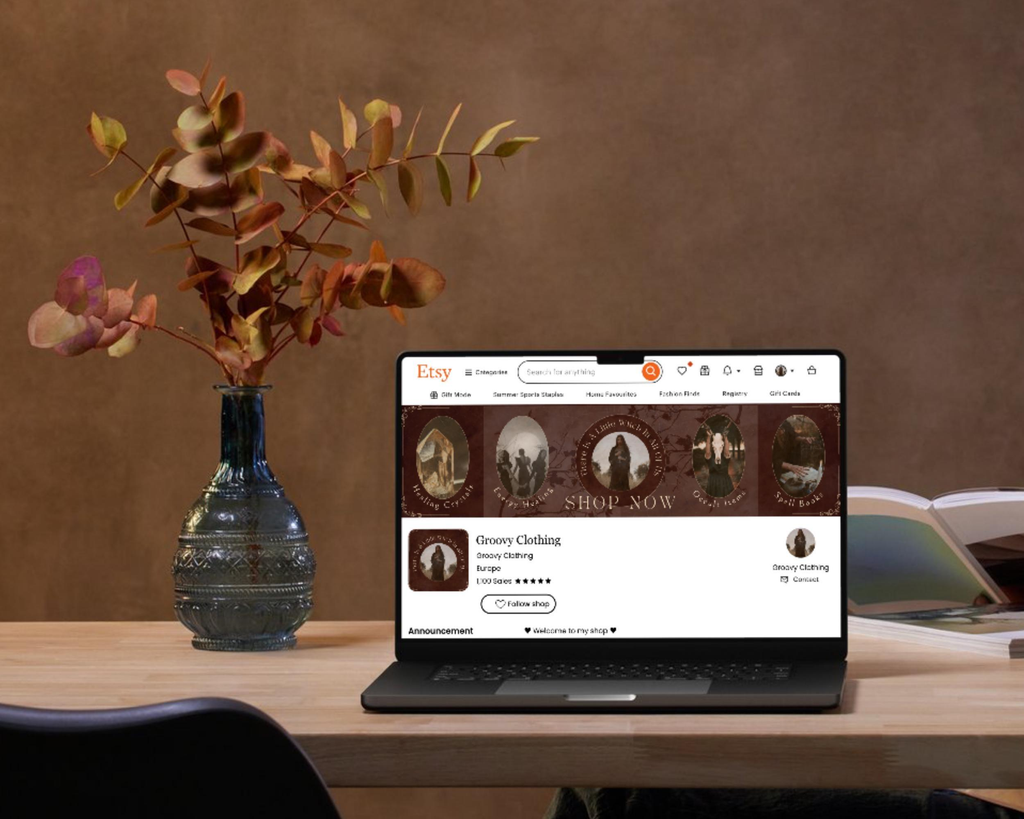
Your Etsy storefront is your online shop window. A professional and cohesive appearance can help create confidence before someone even looks closely at your products.
Etsy recommends creating a consistent visual identity across elements such as your shop icon, banner, photography, and About section.
How to Make $3,000/Month on Pinterest (10 Proven Strategies That Actually Work)
Make sure your shop includes:
- A recognizable shop name
- A professional shop icon
- A clear banner
- A completed About section
- Accurate shop policies
- High-quality product listings
- Clear shipping and processing information
- Consistent branding
You don’t need an expensive designer to accomplish this. A simple, clean design is often better than an overly complicated one.
Step 2: Create a Consistent Brand
Your Etsy shop shouldn’t feel like a random collection of products.
It should feel like a brand.
Choose a visual style and use it consistently across your shop.
For example, you could decide on:
- 2–3 brand colors
- One or two fonts
- A specific photography style
- A consistent background
- A recognizable logo
- A particular tone of voice
Suppose you’re selling minimalist home decor.
You might use neutral colors, clean backgrounds, natural lighting, and simple lifestyle photography.
Now imagine another seller offering similar products but using random backgrounds, inconsistent fonts, and low-quality images.
Even if the products are similar, the first shop may immediately feel more established.
Etsy’s current branding guidance also highlights the importance of a cohesive visual identity and using your shop design to communicate what makes your business unique.
Related – How to Make Money on Facebook With ChatGPT: 15 Easy Ideas
Step 3: Make Your Product Photos Sell the Product
Your product photos are one of the most important parts of your Etsy listing.
A customer can’t physically touch your product.
Your photographs need to do that communication for you.
Etsy’s Seller Handbook notes that the first listing image can help earn the click, while additional images can provide the information shoppers need to make a purchase decision. Etsy recommends showing multiple angles, details, lifestyle context, and accurate product information.
Instead of uploading one basic product photo, think about what questions a buyer might have.
For example:
Photo 1: Main product image
Show the product clearly and make it immediately understandable.
Photo 2: Different angle
Give the buyer another perspective.
Photo 3: Close-up
Show texture, materials, stitching, printing, or other important details.
Photo 4: Lifestyle image
Show the product being used or placed in its intended environment.
Photo 5: Size information
Help buyers understand the actual dimensions.
Photo 6: Features
Highlight important features or benefits.
Photo 7: Packaging
Show what customers can expect when their order arrives.
The goal isn’t simply to make your listing look attractive.
The goal is to remove uncertainty.
Step 4: Write Product Descriptions for Humans
Your product description shouldn’t read like a collection of keywords.
It should answer the questions a potential customer is likely to have.
A strong description can explain:
- What the product is
- Who it’s for
- What materials are used
- Available sizes
- Colors
- Dimensions
- How it can be used
- Care instructions
- Processing time
- Shipping information
- What is included in the purchase
Etsy also recommends making descriptions informative while incorporating relevant keywords naturally rather than simply copying a title or stuffing keywords into the text.
For example, instead of writing:
“Personalized mug, coffee mug, custom mug, gift mug, personalized gift.”
Write something like:
“Create a personalized coffee mug featuring your chosen name or message. This ceramic mug makes a thoughtful birthday, wedding, or everyday gift for coffee and tea lovers.”
The second version sounds like something a real person would actually write.
Step 5: Make Your Etsy Listings Easy to Understand
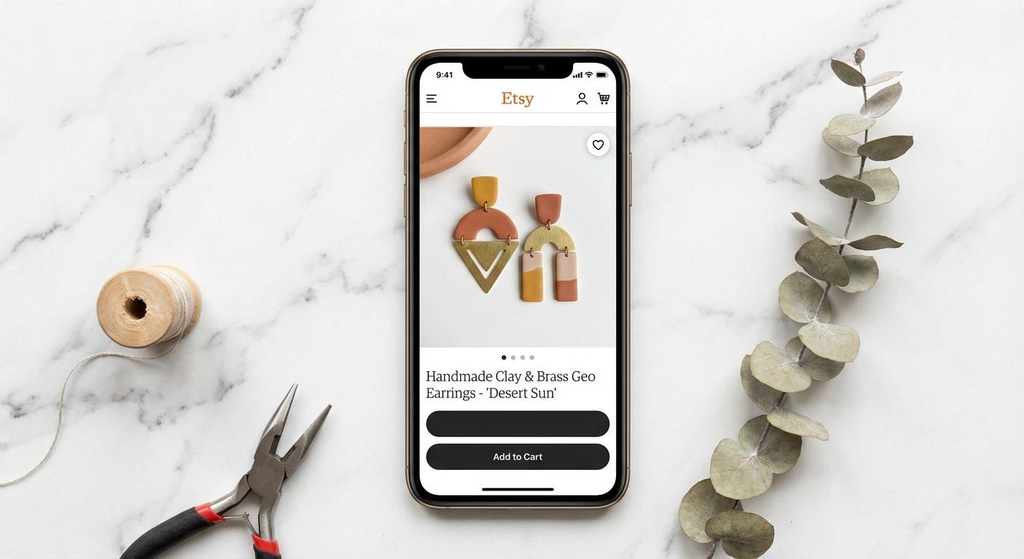
Think about your listing from the buyer’s perspective.
A customer should not have to send you three messages just to understand what they’re buying.
Before publishing a listing, ask yourself:
Can someone understand the product within a few seconds?
They should be able to quickly understand:
- What you’re selling
- How much it costs
- What they receive
- Available options
- Size or dimensions
- Materials
- Processing time
- Shipping information
- Important limitations
The easier you make the buying decision, the fewer unnecessary doubts a customer has to overcome.
You can to Read – 10 Best Survey Apps That Pay Real Money
Step 6: Study Successful Etsy Competitors
You don’t need to copy successful Etsy sellers.
Instead, study them.
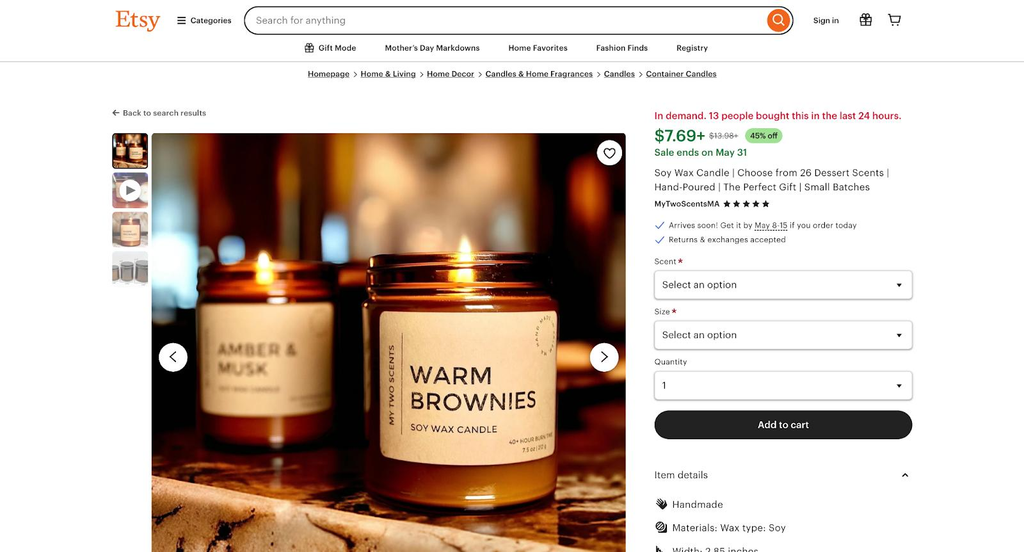
Search Etsy for products similar to yours and look carefully at shops that consistently attract attention.
Analyze:
- Product titles
- Photos
- Pricing
- Product variations
- Descriptions
- Reviews
- Shop branding
- Number of listings
- Packaging
- Customer questions
- Their best-selling products
Ask yourself:
What are they doing that makes their shop look trustworthy?
Then identify opportunities to make your own shop different or more useful.
For example, perhaps competitors have beautiful product photos but weak descriptions.
Or perhaps they have good descriptions but don’t show the product being used.
That gap could become your opportunity.
Step 7: Focus on the Customer’s Questions
One of the simplest ways to improve an Etsy listing is to listen to what customers are asking.
If multiple buyers ask:
“How big is this?”
Add the dimensions to your listing.
If customers ask:
“Is this available in another color?”
Consider adding variations.
If buyers ask:
“When will this ship?”
Make your processing and shipping information easier to find.
Your customers are essentially telling you how to improve your listing.
Pay attention.
Etsy also emphasizes clear product photos, descriptions, dimensions, materials, and other details as ways to reduce buyer uncertainty.
Read this Also – 30 Ways to Make Money Fast without Investment: Practical Ideas for Quick Cash
Step 8: Use Trust-Building Details
People are more comfortable buying when they understand what to expect.
Your shop should answer the question:
“Why should I trust this seller?”
You can build that trust by providing:
- Clear product photos
- Honest descriptions
- Transparent policies
- Accurate shipping information
- A completed About section
- Professional branding
- Fast and helpful communication
- Customer reviews
- Consistent product quality
Your About section is particularly useful because it allows shoppers to understand the person or business behind the products. Etsy recommends using this space to explain your story, inspiration, creative process, and the people involved in the shop.
Remember, Etsy isn’t just a marketplace full of products.
It’s also a marketplace built around independent sellers and their stories.
Step 9: Give Buyers a Reason to Feel Safe
Online shopping always involves some uncertainty.
The customer may be wondering:
“Will it look like the photo?”
“Will it arrive on time?”
“What happens if there’s a problem?”
“Is this seller legitimate?”
You can’t remove every concern, but you can answer those questions before the customer asks.
Be transparent about your:
- Processing times
- Shipping
- Returns
- Exchanges
- Product specifications
- Materials
- Customization options
- Care instructions
Don’t promise something you can’t deliver.
Trust isn’t created by making exaggerated claims.
It’s created by consistently delivering what you promised.
Step 10: Don’t Try to Sell Everything
When starting your Etsy shop, it can be tempting to create dozens of completely unrelated products.
More products don’t automatically mean more sales.
Instead, consider building around a clear niche.
For example:
Instead of:
“Handmade Gifts”
Try:
“Personalized Gifts for Dog Lovers”
Or instead of:
“Home Decor”
Try:
“Minimalist Printable Wall Art”
A focused product range can make your shop easier to understand and can help you create a stronger brand identity.
Step 11: Calculate Your $1,000 Goal
Break the $1,000 target into smaller numbers.
For example:
If your average order is $20:
$1,000 ÷ $20 = 50 orders
If your average order is $40:
$1,000 ÷ $40 = 25 orders
If your average order is $50:
$1,000 ÷ $50 = 20 orders
If your average order is $100:
$1,000 ÷ $100 = 10 orders
This doesn’t mean you should simply increase your prices.
Instead, think about how you can increase your average order value naturally.
You could offer:
- Product bundles
- Matching products
- Personalized upgrades
- Multiple-item sets
- Premium versions
- Add-ons
For example, instead of selling one printable for $5, you might offer a larger themed bundle for $20 if the additional value makes sense for your customers.
Step 12: Stay Consistent
One of the biggest mistakes beginners make is expecting immediate results.
They upload three listings, get no sales, and assume Etsy doesn’t work.
Building a successful shop usually takes experimentation.
You may need to test:
- Different product ideas
- Different thumbnails
- Different keywords
- Different prices
- Different descriptions
- Different product variations
- Different promotional strategies
Look at your shop as an ongoing experiment.
If something isn’t working, don’t simply give up.
Ask:
What can I improve?
A Simple First $1,000 Etsy Action Plan
Here’s a practical framework you can follow.
Week 1: Build the foundation
Set up:
- Shop name
- Logo
- Banner
- About section
- Shop policies
- Shipping information
- Brand colors
- Product photography style
Your goal is to make the shop look complete.
Week 2: Build your listings
Create your initial product range.
For every listing:
- Research relevant keywords
- Write a clear title
- Create a useful description
- Add strong photos
- Include product specifications
- Add variations where appropriate
- Review your pricing
Week 3: Improve your storefront
Look at your shop as if you’re a new customer.
Ask:
“Would I trust this shop?”
“Can I understand the products?”
“Do the photos look professional?”
“Can I easily find the information I need?”
Fix anything that creates doubt.
Week 4: Analyze and improve
Start looking at your results.
Identify:
- Products getting views
- Products getting favorites
- Products getting sales
- Listings receiving little attention
- Questions customers frequently ask
Then improve your listings based on what you’re learning.
Common Etsy Mistakes to Avoid
1. Poor product photography
A great product can struggle if the photos don’t communicate its value.
2. Incomplete shop information
An unfinished storefront can create unnecessary doubt.
3. Keyword stuffing
Don’t write for an algorithm at the expense of your customers.
4. Copying competitors
Use competitors for research, not duplication.
5. Ignoring customer questions
Repeated questions are valuable feedback.
6. Changing everything too quickly
Give your improvements enough time to generate useful data.
7. Expecting guaranteed income
No Etsy strategy can guarantee that you’ll make $1,000.
Your goal should be to consistently improve your products, listings, customer experience, and marketing.
Final Thoughts
Making your first $1,000 on Etsy isn’t about finding one secret trick.
It’s about putting together many small pieces.
A trustworthy storefront.
Strong product photography.
Clear descriptions.
Helpful information.
Consistent branding.
Good customer service.
Relevant products.
And the willingness to keep improving.
The most important mindset shift is to stop thinking only like a seller.
Start thinking like a buyer.
When someone lands on your Etsy shop, ask yourself:
“What would make me comfortable buying from this store?”
Then build your shop around that answer.
Your first $1,000 may not happen overnight, and there is no guaranteed formula for reaching it. But by creating a professional storefront, understanding your customers, improving your listings, and staying consistent, you give your Etsy business a much stronger foundation for growth.
Start with one excellent listing.
Then create another.
Keep learning, keep improving, and let every customer interaction teach you something about your business.
Need More Money-Making Ideas?
I know these make-money-fast ideas will keep you busy for a while, but for those of you who want even more, here’s a list of similar but still different ideas:
VideoSharing
- Passive Income in 2026: 7 Real Online Income Streams You Can Start Today
- How to Make Money with Affiliate Marketing in 2026 ? (What Really Works Now)
- How to Make Money with a Faceless YouTube Channel in 2026
- How to Leverage AI Tools to Build a 6-Figure Online Income in 2026
- How to Make Money on Facebook With ChatGPT: 15 Easy Ideas