|
Getting your Trinity Audio player ready... |
Email marketing remains one of the most effective ways for businesses to connect with their audiences, nurture leads, build customer relationships, and generate sales. Whether you run an eCommerce store, manage a digital marketing agency, or promote a service-based business, a well-planned email marketing strategy can help you reach the right people with the right message.
However, simply sending emails is not enough. Your subscribers receive messages from brands, businesses, and service providers every day. If your emails fail to capture their attention or provide meaningful value, they may remain unopened or get deleted without a second glance.
That is why understanding the best email marketing hacks is essential for improving campaign performance. From writing compelling subject lines to creating personalized content and optimizing calls to action, small improvements can make your emails more relevant and engaging.
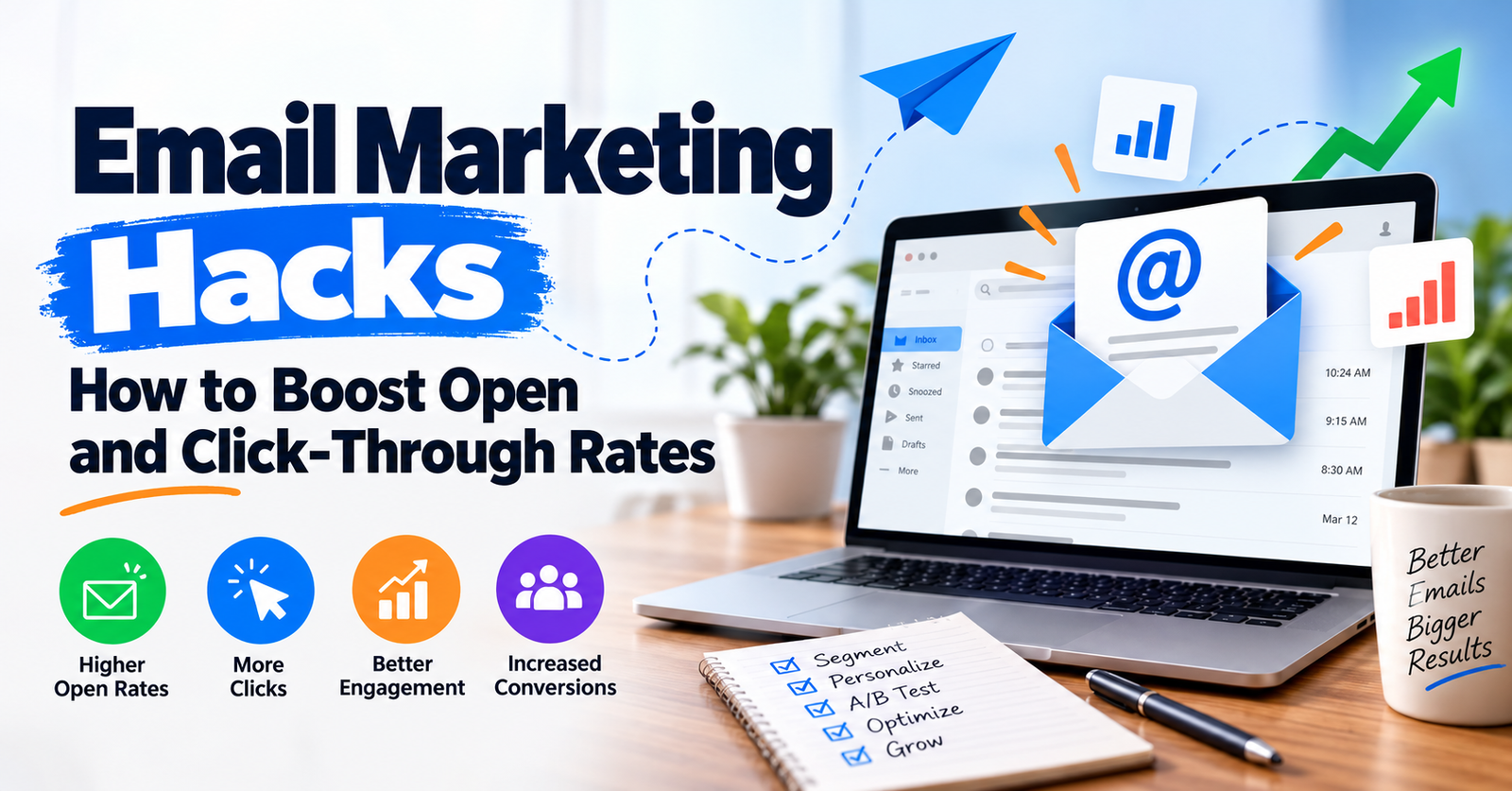
In this guide, you will discover 10 practical email marketing strategies to improve open rates, increase click-through rates, and encourage subscribers to take meaningful action.
What Is Email Marketing and Why Does It Matter?
Email marketing is a digital marketing strategy that involves sending targeted messages to people who have chosen to receive communications from your business. These messages may include promotional offers, newsletters, product updates, educational content, welcome emails, and personalized recommendations.
Unlike social media platforms, where your content competes with constantly changing feeds and algorithms, email provides a direct communication channel with your subscribers.
Businesses can use email marketing to:
- Build long-term relationships with customers.
- Promote products, services, and special offers.
- Generate website traffic and qualified leads.
- Recover abandoned shopping carts.
- Encourage repeat purchases and customer loyalty.
- Share valuable information and educational content.
- Measure campaign performance using engagement and conversion data.
For example, an online clothing store can send personalized product recommendations based on previous purchases, while a digital marketing agency can share SEO tips and case studies to attract potential clients.
The key to successful email marketing is delivering useful, relevant content instead of sending promotional messages without a clear purpose.
Understanding Email Open Rates and Click-Through Rates
Before applying email marketing hacks, it is important to understand the metrics that help measure campaign performance.
Email open rate traditionally measures the percentage of delivered emails recorded as opened. However, privacy features and automated email loading can make this metric less reliable. It should be interpreted alongside other engagement indicators.
Click-through rate (CTR) measures the percentage of delivered emails that generate at least one tracked click. Some platforms calculate clicks against delivered emails, while others use different denominators, so always check the definition used by your email service provider.
Click-to-open rate (CTOR) measures the percentage of recorded opens that result in a click. This can help evaluate how effectively email content encourages readers to interact, although privacy-related open tracking limitations also affect this metric.
Conversion rate measures the percentage of recipients who complete a desired action, such as making a purchase, submitting a form, booking a consultation, or downloading a resource.
These metrics work together to show where your campaign needs improvement. For example, a low open rate may indicate a subject line or deliverability problem, while a strong open rate combined with few clicks may suggest that the email content or call to action needs attention.
The goal is not simply to increase opens. It is to deliver emails that attract attention, encourage engagement, and support your business objectives.
1. Craft Irresistible Email Subject Lines

Your subject line is often the first part of an email that subscribers notice. It helps them decide whether the message deserves their attention or should be ignored.
A generic subject line may fail to communicate value, while a specific and relevant one can encourage recipients to learn more.
How to Write Better Email Subject Lines
Highlight a clear benefit. Tell subscribers what they can gain by opening the email. For example, replace “Our Latest Marketing Update” with “5 SEO Tips to Improve Your Website Traffic.”
Use numbers when they add clarity. Numbers can make a subject line more specific and easier to scan. Examples include “7 Ways to Improve Your Email Campaigns” or “3 Ideas to Increase Repeat Sales.”
Create curiosity without misleading readers. A subject line can introduce an interesting question or reveal an unexpected benefit, but the email should deliver on its promise.
Keep the wording concise. Shorter subject lines are often easier to read on mobile devices. Put the most important information near the beginning because some email clients truncate longer text.
Test personalization carefully. Mentioning a subscriber’s name or referring to a relevant interest may improve relevance when the information is accurate and appropriately collected.
Email Subject Line Examples
| Email purpose | Example subject line |
|---|---|
| Educational newsletter | 5 Email Marketing Tips Worth Trying |
| eCommerce promotion | Discover This Week’s New Arrivals |
| Lead nurturing | A Practical Guide to Better SEO |
| Customer retention | Your Next Order: Useful Tips and Ideas |
| Webinar invitation | Join Our Upcoming Digital Marketing Workshop |
Avoid false urgency, exaggerated promises, and misleading claims. An effective subject line sets an accurate expectation and gives subscribers a compelling reason to open the message.
2. Segment Your Email List for Better Engagement
Sending the same email to every subscriber may seem convenient, but it often results in messages that are irrelevant to a large part of your audience. Different subscribers have different interests, needs, budgets, and buying intentions.
Email list segmentation involves dividing your subscribers into smaller groups based on shared characteristics or behaviors. This allows you to create more relevant campaigns and deliver information that matches each group’s interests.
Effective Ways to Segment Your Email Audience
- Demographic segmentation: Organize subscribers using appropriate information such as age group, profession, or business type when relevant and lawfully collected.
- Behavioral segmentation: Group subscribers based on actions such as email clicks, website visits, product views, or previous purchases.
- Purchase history: Recommend complementary products to customers who have already purchased from your store.
- Engagement level: Create separate campaigns for highly engaged subscribers and those who have not interacted with recent emails.
- Customer lifecycle stage: Distinguish between new subscribers, prospective customers, first-time buyers, and repeat customers.
For example, an online fashion retailer can send winter jacket recommendations to shoppers who have browsed winter clothing rather than sending the same promotion to everyone.
Similarly, a digital marketing agency can create separate email sequences for business owners interested in SEO, Google Ads, or social media advertising.
Why Email Segmentation Works
Segmentation helps businesses deliver content that better matches subscriber expectations. It can reduce irrelevant promotions, improve click-through rates, and make customer communication more useful.
Start with two or three meaningful segments rather than creating dozens of complicated groups. As you collect more engagement data, refine your segmentation strategy based on actual campaign performance.
3. Optimize Email Timing and Sending Frequency
Even a well-written email can go unnoticed if it arrives when your subscribers are unlikely to check their inboxes.
The ideal sending time depends on your audience, industry, location, daily routine, and the purpose of the email. There is no universal time that guarantees higher open rates for every business.
For example, a business-to-business newsletter may perform well during working hours, while an eCommerce promotion might receive more attention during the evening or around a shopping event.
How to Find the Best Time to Send Emails
Analyze previous campaign data. Review the days and times when your subscribers have historically engaged with your messages. Look for patterns rather than relying on a single campaign.
Experiment with different time slots. Test morning, afternoon, and evening sends across comparable audience groups. Keep other campaign variables as consistent as possible.
Consider time zones. If your audience is spread across India, the United States, the United Kingdom, or Australia, schedule campaigns according to recipients’ local times when your platform supports it.
Use automated scheduling. Some email marketing platforms provide send-time optimization features that estimate when individual subscribers are most likely to engage.
How Often Should You Send Marketing Emails?
Sending too frequently can lead to fatigue, unsubscribes, and spam complaints. Sending too rarely may cause subscribers to forget your brand.
A weekly newsletter can be a useful starting point for some businesses, while transactional emails and behavior-triggered messages may require different schedules. The right frequency depends on subscriber expectations and the value of each message.
Monitor engagement, unsubscribes, spam complaints, and conversions to identify whether your schedule is working. Whenever possible, let subscribers choose their preferred communication frequency.
4. Personalize Emails Beyond the Subscriber’s Name
Personalization is more than adding a subscriber’s first name to the subject line. Effective email personalization involves using relevant information to make the message more useful to the recipient.
A generic message may introduce a product, but a personalized email can explain why that product or resource is relevant to a subscriber’s interests.
Practical Email Personalization Techniques
Recommend relevant products. An online store can suggest related items based on previous purchases or product categories a customer has explored.
Adapt content to subscriber interests. A digital marketing newsletter can send SEO resources to readers interested in organic traffic and advertising tips to subscribers who engage with PPC content.
Send lifecycle-based emails. Welcome new subscribers with an introduction to your brand, educate prospective customers before a purchase, and provide useful follow-up information to existing customers.
Recognize important customer milestones. Where appropriate, send anniversary messages, loyalty rewards, or reminders connected to a customer’s relationship with your business.
Use dynamic email content. Certain email platforms allow different product recommendations, offers, or content sections to appear for different audience segments within the same campaign.
For example, a subscriber who regularly reads content about technical SEO may appreciate an email featuring a website audit checklist rather than an unrelated promotional offer.
Personalization should always respect privacy. Use accurate information collected through appropriate methods, provide relevant choices, and avoid including sensitive personal details that recipients would not expect to see in a marketing email.
5. Keep Your Email Content Short, Clear, and Actionable

Once a subscriber opens your email, the next challenge is keeping their attention long enough to communicate your message.
People often scan emails quickly, especially on mobile devices. Long introductions, dense paragraphs, and multiple competing messages can make it difficult for readers to understand what you want them to do.
The solution is to create concise, scannable, and actionable email content.
Best Practices for Writing Engaging Emails
- Start with the main benefit. Explain immediately why the email matters to the reader.
- Use short paragraphs. Break long blocks of text into smaller sections that are easier to scan.
- Include descriptive headings. Make it easy for readers to understand each section without reading every sentence.
- Use bullet points strategically. Highlight important benefits, features, or steps.
- Focus on one primary objective. Avoid asking subscribers to complete several unrelated actions in the same message.
- Write in a conversational tone. Use clear language that sounds natural and reflects your brand’s personality.
For example, instead of writing a lengthy introduction about your latest marketing service, explain the problem you solve, highlight the key benefits, and direct the reader to a relevant landing page.
Create a Strong Call to Action
A call to action (CTA) tells readers what to do next. It might encourage them to purchase a product, read an article, register for an event, or schedule a consultation.
Weak CTA text such as “Click Here” provides little context. More descriptive alternatives include:
- Explore Our Latest Collection
- Download the Free SEO Checklist
- Book Your Strategy Call
- Read the Complete Guide
- View Available Plans
Make your CTA easy to find and ensure the destination page matches the promise made in the email. If the objective is to generate leads, send subscribers to a relevant form or landing page rather than an unrelated homepage.
6. Use A/B Testing to Improve Email Campaign Performance
A/B testing, also called split testing, allows you to compare two versions of an email to determine which performs better with your audience.
Instead of relying entirely on assumptions, you can use real campaign data to understand which messages, designs, and offers encourage engagement.
What Should You A/B Test?
Subject lines: Compare a benefit-focused subject line with a curiosity-driven alternative.
Preview text: Test different supporting messages that appear alongside the subject line in many inboxes.
CTA wording: Compare “Get Started Today” with a more specific option such as “Request Your Free Consultation.”
Email design: Evaluate whether a simple text-based email or a structured promotional layout works better for a particular campaign.
Content length: Test a concise message against a more detailed version when both approaches are reasonable for the audience.
Offers and messaging: Compare different value propositions, product benefits, or promotional approaches.
How to Run an Effective A/B Test
- Choose one variable you want to improve.
- Develop two versions that differ primarily in that variable.
- Divide a suitable audience into comparable groups.
- Select a success metric that matches your campaign objective.
- Run the test under comparable conditions and allow enough time for meaningful results.
- Apply the winning approach cautiously and continue testing.
For example, if your goal is to increase website visits, compare versions using click-through rate rather than selecting a winner solely because it generated more opens.
Avoid declaring a winner from a very small sample or changing multiple variables simultaneously. A disciplined testing process helps you identify improvements that are more likely to be repeatable.
7. Build Trust With Social Proof and Relevant Offers
Subscribers are more likely to consider an offer when they understand its value and have reasons to trust the business behind it.
Social proof helps establish credibility by demonstrating how other customers have experienced a product or service. When used honestly, it can reduce uncertainty and support purchasing decisions.
Ways to Include Social Proof in Emails
Customer testimonials: Share genuine feedback from customers who have agreed to its use.
Product reviews: Highlight relevant customer reviews that explain product quality, usability, or benefits.
Case studies: Describe a real customer challenge, the solution implemented, and the measurable outcome when reliable evidence is available.
Customer stories: Show how a product or service fits into a real customer’s needs.
Industry recognition: Mention legitimate certifications, awards, or professional recognition when they are relevant to your audience.
For instance, a digital marketing agency could include a short case study describing how a client improved qualified lead generation after a campaign restructure. The claim should be supported by real data and presented with appropriate context.
Use Urgency Without Misleading Subscribers
Time-sensitive offers can encourage readers to act, especially when the deadline is genuine.
Examples include an early-bird registration deadline, a seasonal promotion with a clearly defined end date, or a limited booking window for a real event.
Avoid fabricated countdowns, exaggerated scarcity, and claims that an offer will disappear when it will not. Trust is more valuable than a temporary increase in clicks.
The best email promotions combine a clear benefit, credible evidence, transparent terms, and a straightforward next step.
8. Make Every Email Mobile-Friendly

Many subscribers read their emails on smartphones, so a message that looks attractive on a desktop computer may not provide the same experience on a smaller screen.
If readers have to zoom in, scroll horizontally, or struggle to tap a button, they may leave the email without engaging.
Mobile-friendly email design makes your content easier to read, navigate, and interact with across different devices.
Mobile Email Optimization Tips
- Use responsive email templates: Choose layouts that adapt to different screen sizes.
- Keep text readable: Select a comfortable font size and maintain sufficient contrast between text and background.
- Make CTAs easy to tap: Provide enough space around buttons and links to reduce accidental clicks.
- Optimize images: Compress image files to improve loading performance without sacrificing essential visual quality.
- Keep layouts simple: Avoid excessive columns, complicated designs, and unnecessary decorative elements.
- Check your links: Make sure buttons, forms, and landing pages work correctly on mobile devices.
You should also preview your email in different email clients and test how it appears on both desktop and mobile screens.
For example, an eCommerce promotional email should allow subscribers to view a product, understand its main benefits, and reach the checkout page without unnecessary steps.
Remember that mobile optimization extends beyond the email itself. Your landing pages and checkout process should provide a consistent, easy-to-use experience after someone clicks your CTA.
9. Improve Email Deliverability and Avoid Spam Filters
Even a beautifully written email cannot deliver results if it fails to reach the intended inbox.
Email deliverability refers to the ability of your messages to reach recipients’ inboxes rather than being blocked, rejected, or filtered into spam.
Email providers consider multiple factors when evaluating incoming messages, including sender reputation, authentication, recipient engagement, complaint rates, and message characteristics.
Simply avoiding certain words will not guarantee inbox placement. Modern spam filtering systems evaluate a much broader range of signals.
Best Practices for Better Email Deliverability
Authenticate your sending domain. Configure SPF, DKIM, and DMARC appropriately to help receiving email providers verify your domain and reduce unauthorized use.
Use permission-based email lists. Send marketing campaigns to people who have given appropriate consent or otherwise meet the applicable legal requirements.
Remove invalid addresses. Monitor delivery failures and suppress addresses that repeatedly bounce.
Maintain a healthy sender reputation. Avoid sudden, unexplained increases in sending volume and monitor spam complaints.
Provide a clear unsubscribe option. Make it easy for recipients to stop receiving promotional emails. Follow applicable unsubscribe requirements, including relevant one-click unsubscribe standards.
Avoid misleading subject lines. Ensure the subject accurately represents the content and offer.
Monitor engagement trends. Review delivery rates, clicks, complaints, bounces, and conversions to identify potential issues.
Keep Your Email List Clean
An email list can become less effective over time as people change jobs, abandon addresses, or lose interest in your content.
Regular list maintenance helps protect deliverability and keeps campaign reporting meaningful. Suppress hard bounces, honor unsubscribes promptly, and investigate repeated delivery problems.
For subscribers who have stopped engaging, consider a carefully designed re-engagement campaign. If they do not respond, stop sending routine marketing emails to them rather than repeatedly trying to force engagement.
A smaller, permission-based audience that genuinely wants your messages can be more valuable than a large list filled with inactive or uninterested contacts.
10. Monitor Email Marketing Metrics and Continuously Improve
Successful email marketing depends on understanding what happens after a campaign is sent.
Tracking the right metrics helps you identify which strategies attract attention, which messages generate clicks, and which campaigns contribute to business growth.
Important Email Marketing Metrics to Track
| Metric | What it tells you |
|---|---|
| Delivery rate | The proportion of sent emails successfully delivered, based on your platform’s definition |
| Open rate | The proportion of delivered emails recorded as opened |
| Click-through rate | The proportion of delivered emails generating tracked clicks |
| Click-to-open rate | The proportion of recorded opens that generate clicks |
| Conversion rate | The proportion of recipients who complete a desired action |
| Unsubscribe rate | The proportion of recipients who unsubscribe |
| Spam complaint rate | The proportion of recipients who report messages as spam |
| Revenue per email | The revenue attributed to a campaign relative to the number of emails sent or delivered, depending on your calculation |
Open rates should be treated cautiously because privacy features and automated image loading can distort the figures. Clicks, conversions, revenue, and complaint trends can provide additional evidence of campaign performance.
Use Analytics to Identify Opportunities
Suppose an email receives a reasonable number of opens but generates very few website visits. You may need to improve the content, make the CTA more prominent, or align the message more closely with the subscriber’s interests.
If clicks are strong but purchases remain low, investigate the landing page, product pricing, checkout experience, shipping information, or other potential barriers to conversion.
If unsubscribe rates increase after a particular campaign, review whether the content was relevant and whether the sending frequency matched subscriber expectations.
Use consistent tracking parameters, such as UTM tags, to connect email campaigns with website traffic and conversions in your analytics platform.
Review campaign performance regularly, document what you learn, and use those insights to improve future emails. The objective is to build a repeatable process that supports engagement and measurable business outcomes.
11. Automate Email Campaigns to Save Time and Increase Relevance
Email automation allows businesses to send messages automatically when subscribers complete specific actions or reach particular stages in the customer journey.
Instead of manually sending every message, you can create workflows that deliver relevant information at the appropriate time.
Automation is particularly useful for businesses that want to nurture leads, improve customer retention, and reduce repetitive marketing work.
Essential Email Automation Workflows
Welcome email sequence: Introduce your business, explain what subscribers can expect, and share useful resources after they join your list.
Abandoned cart emails: Remind eligible shoppers about products left in their carts, subject to applicable consent, privacy, and messaging requirements.
Lead nurturing sequence: Send educational content to prospective customers who need more information before making a decision.
Post-purchase emails: Share order information, product guidance, care instructions, or relevant recommendations.
Re-engagement campaigns: Contact inactive subscribers with useful content or a preference update option before suppressing those who remain unresponsive.
Customer feedback requests: Invite customers to share feedback after an appropriate interaction or purchase.
For example, a software company could send a welcome email immediately after registration, followed by a practical setup guide and an invitation to book a demonstration.
An online store could send a post-purchase email with product care instructions and later recommend complementary items when relevant.
Automation should feel helpful rather than intrusive. Set sensible frequency limits, account for subscriber preferences, and prevent overlapping workflows from sending excessive messages.
12. Write Preview Text That Complements Your Subject Line
Preview text, sometimes called preheader text, is the short description that many email clients display next to or below the subject line.
While the subject line introduces the email, preview text gives subscribers additional context about what they will find inside.
Ignoring this space can result in unhelpful text being displayed, such as navigation labels, image descriptions, or generic opening sentences.
How to Optimize Email Preview Text
- Expand on the benefit promised by the subject line.
- Provide a specific reason to open the message.
- Keep the wording clear and concise.
- Avoid repeating the subject line unnecessarily.
- Ensure the preview text accurately represents the email content.
For example:
Subject line: 5 Ways to Improve Your Email Marketing
Preview text: Learn how segmentation, personalization, and testing can improve campaign performance.
For an eCommerce campaign:
Subject line: Explore Our Latest Winter Collection
Preview text: Discover seasonal styles and find options that suit your wardrobe.
Preview text should work alongside your subject line rather than compete with it. Test different combinations to understand which messages attract qualified attention from your subscribers.
13. Improve the Entire Journey From Email Click to Conversion
Getting subscribers to click is an important milestone, but the click alone does not guarantee a sale, registration, or lead.
The experience after the click has a direct impact on whether readers complete the intended action.
Imagine receiving an email advertising a special offer. You click the CTA, but the landing page does not mention the offer, loads slowly, or requires you to navigate several pages before finding the product.
That disconnect can lead to lost conversions even when the original email performed well.
How to Create a Better Post-Click Experience
Maintain message consistency. The headline, offer, and benefits on your landing page should match the email that brought the visitor there.
Reduce unnecessary steps. Make forms, checkout processes, and registration flows as straightforward as possible.
Use clear landing page headlines. Explain the offer immediately and show visitors how to proceed.
Optimize page speed and mobile usability. Ensure the destination works well on the devices subscribers use.
Measure completed actions. Track purchases, form submissions, bookings, or downloads instead of relying only on clicks.
Test the full conversion journey. Review the process from the email inbox to the final confirmation page.
For example, if your email promotes a free SEO audit, the CTA should lead directly to a relevant landing page where visitors can understand the offer and submit their details.
By optimizing the entire journey, you can turn email engagement into meaningful business results.
Common Email Marketing Mistakes to Avoid
Even experienced marketers can make mistakes that reduce campaign effectiveness. Recognizing these problems can help you protect subscriber relationships and improve results.
Sending Emails Without a Clear Purpose
Every campaign should have a specific objective. Before sending, decide whether the email is intended to educate, generate leads, encourage a purchase, or retain existing customers.
Buying Email Lists
Purchased lists often contain people who have never agreed to receive your messages. They can increase complaints, harm sender reputation, and create privacy or compliance risks.
Build your list through transparent signup forms, useful lead magnets, and appropriate customer communication practices.
Using Too Many Calls to Action
Multiple competing CTAs can confuse readers and weaken the primary message. Focus on one main action, adding secondary links only when they support the campaign objective.
Ignoring Unsubscribes and Complaints
Subscribers should be able to manage their preferences easily. Honor unsubscribe requests, investigate complaint spikes, and avoid repeatedly contacting people who have disengaged.
Measuring Success Through Opens Alone
Recorded opens can be affected by privacy technologies and automated activity. Combine open data with clicks, conversions, revenue, and other relevant indicators to understand campaign performance.
Failing to Test Before Sending
Broken links, incorrect personalization, missing images, and formatting problems can damage the subscriber experience. Send test emails, check links, verify audience targeting, and review the final message before launch.
Avoiding these common mistakes creates a stronger foundation for sustainable email marketing growth.
How to Create an Effective Email Marketing Strategy
The most effective email marketing programs combine relevant content, consistent communication, technical reliability, and ongoing experimentation.
If you are just starting, you do not need dozens of complicated campaigns. Begin with a manageable strategy and improve it as you collect reliable performance data.
Here is a practical framework you can follow:
- Define your objective: Decide whether you want to increase sales, generate leads, drive website traffic, or improve customer retention.
- Understand your audience: Identify subscriber needs, interests, and the problems your emails can help solve.
- Build a permission-based list: Use appropriate signup methods and communicate clearly about what subscribers will receive.
- Segment your subscribers: Create relevant groups based on interests, behaviors, and customer lifecycle stages.
- Develop useful content: Write clear subject lines, concise messages, and relevant calls to action.
- Check deliverability: Configure domain authentication, maintain list quality, and monitor sender reputation.
- Optimize for mobile: Test layouts, readability, buttons, and landing pages across different devices.
- Run controlled experiments: Test subject lines, preview text, email design, and offers using suitable success metrics.
- Track meaningful outcomes: Measure clicks, conversions, revenue, and subscriber satisfaction alongside open data.
- Refine your strategy: Apply campaign insights to improve future messages and customer experiences.
This approach helps you develop a structured email marketing process without making the work unnecessarily complicated.
Conclusion
Email marketing can help businesses build lasting customer relationships, nurture potential buyers, increase website traffic, and generate measurable revenue. However, achieving better results requires more than sending frequent promotional messages. Businesses need to understand their audiences, deliver relevant content, and create an email experience that makes taking action simple. By applying these email marketing hacks, you can improve subject lines, segment subscribers, personalize campaigns, optimize sending frequency, strengthen deliverability, and use A/B testing to identify what works best. Combine these practices with mobile-friendly design, useful automation, and reliable conversion tracking to make informed decisions about your campaigns. Start with a few improvements, monitor the results, and continue refining your approach. Over time, a consistent, subscriber-focused email marketing strategy can help you boost engagement, increase click-through rates, improve conversions, and build stronger relationships with your audience.