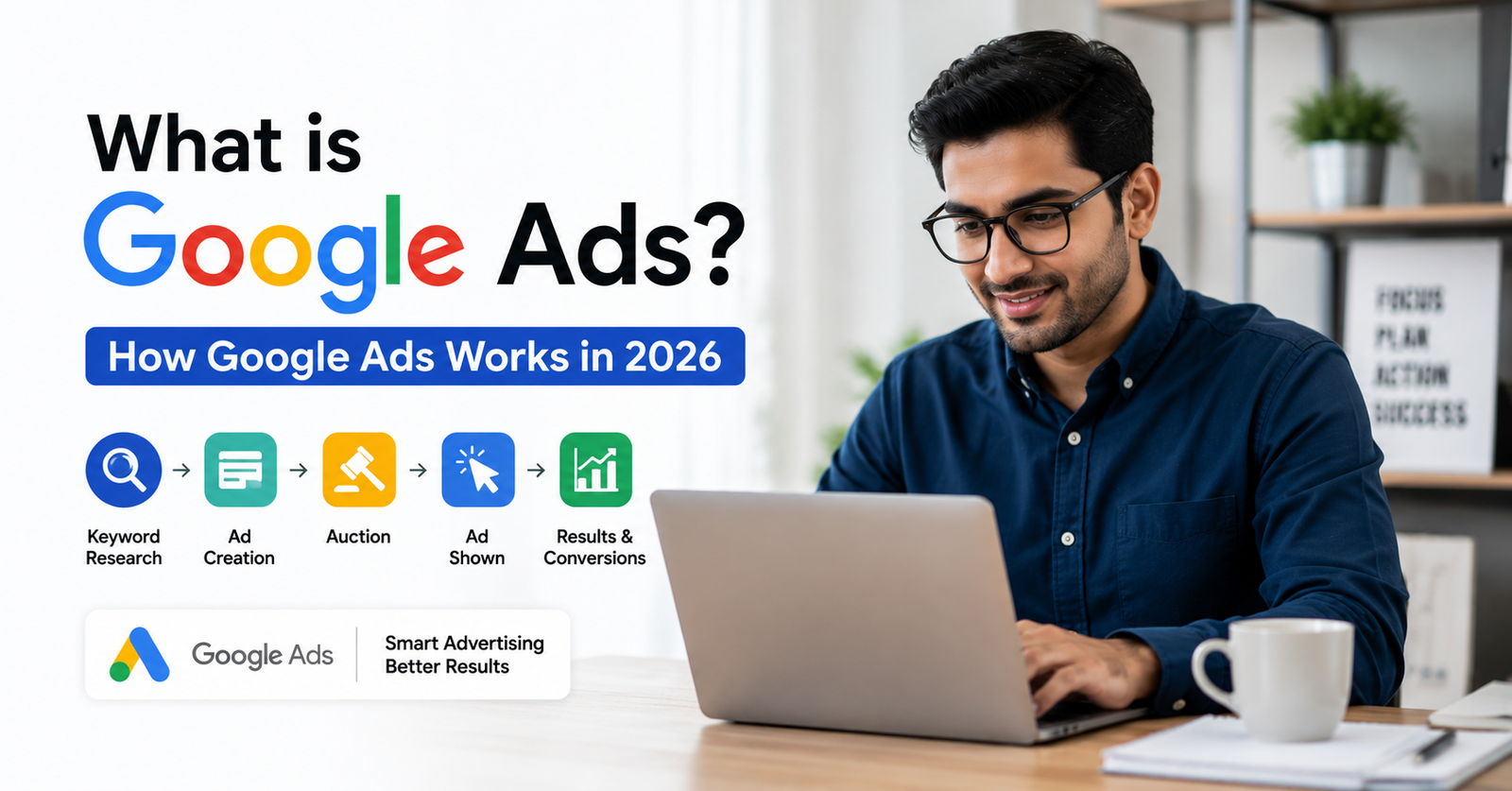
So, you’re curious about Google Ads and what it looks like in 2026? Let’s break it down. At its core, Google Ads is a way for businesses to pay to show ads on Google’s platforms – primarily Google Search, but also YouTube, and a vast network of websites. Think of it as a digital billboard that pops up when people are actively looking for what you offer. In 2026, it’s still about reaching potential customers, but with a significant boost from artificial intelligence. Google is really leaning into AI to make things smarter, more efficient, and, for advertisers, often more automated.
Even with all the new tech, the fundamental concept of Google Ads remains the same. You, as an advertiser, set up campaigns with specific goals, like getting more website visits, leads, or sales. You decide who you want to reach and what your budget will be. Then, Google’s system takes over, using a complex auction process to decide which ads to show, when, and to whom.
In 2026, this process is heavily influenced by AI. Google’s algorithms are constantly learning and adapting, aiming to show your ads to the most relevant people at the right time. This means that while you still provide the strategy and core assets, Google’s AI plays a much bigger role in the granular details of targeting, bidding, and even suggesting creative improvements. It’s less about manually tweaking every setting and more about guiding the AI to achieve your business objectives.
Setting Your Campaign Goals
This is where it all starts. What do you want to achieve with your Google Ads?
Common Campaign Objectives
- Increase Website Traffic: If your main goal is to get more people to visit your website and explore your content or products.
- Generate Leads: This is for businesses that want to collect contact information from potential customers, like email addresses or phone numbers, for follow-up.
- Drive Sales: If you’re an e-commerce business, this is about getting people to make a purchase directly on your site.
- Build Brand Awareness: For newer businesses or those launching a new product, the focus might be on getting your name and what you offer in front of as many relevant eyes as possible.
Budgets and Bidding: The Money Side of Things
Deciding how much you’re willing to spend is crucial. Google Ads operates on an auction system, so you’re essentially bidding against other advertisers for ad space.
Understanding Your Budget
- Daily Budget: You set an average amount you’re comfortable spending each day. Google might spend a bit more or less on any given day, but it aims to average out to your set budget over the month.
- Total Budget: For specific campaigns or promotions, you might set an overall spending limit.
Bidding Strategies in 2026
This is an area where AI is making huge waves. While manual bidding still exists, automated strategies are becoming the default for many.
- Automated Bidding: Google’s AI uses historical data and real-time signals to adjust your bids automatically to help you reach your campaign goals. This can include strategies like:
- Maximize Conversions: Aims to get you the most conversions possible within your budget.
- Target CPA (Cost Per Acquisition): You set a target cost for each conversion, and Google tries to achieve that.
- Target ROAS (Return on Ad Spend): You tell Google how much revenue you want to get for every dollar spent on ads.
- Budget-Limited Campaigns: A notable change for 2026 is how campaigns that are hitting their budget limits are handled. Starting August 17, 2026, Google has updated target-based bidding to manage these situations differently, aiming to ensure that even if a budget is capped, the bidding strategy still works effectively to capture valuable opportunities.
In exploring the intricacies of Google Ads and its evolution in 2026, readers may also find interest in a related article that delves into personal branding and identity in the digital age. This article discusses how individuals navigate their online presence, much like businesses do with Google Ads. For further insights, you can read more about it here: Andy Byron’s wife drops his surname.
Google Search Ads: Reaching People Actively Looking
When most people think of Google Ads, they picture the text ads that appear at the top of Google Search results. This is still a cornerstone of Google Ads, and in 2026, it’s getting a significant AI upgrade.
AI Max for Search: The New Standard
This is one of the biggest changes. AI Max for Search moved out of beta in April 2026 and is now a central feature for Search campaigns. It’s designed to leverage AI to improve targeting and give advertisers more control over their creative elements.
What AI Max for Search Means for You
- Broader Targeting Capabilities: AI helps Google understand not just keywords, but also the intent behind a user’s search, allowing for more sophisticated audience reach.
- Enhanced Creative Controls: While AI assists, you still have input. AI Max aims to help you create more effective ad copy and extensions, but you remain in the driver’s seat for the messaging.
- AI-Assisted Workflows: Google is embedding AI throughout the campaign creation and management process, guiding you with suggestions for keywords, ad copy, and targeting.
The End of Manual Language Targeting
A significant change to note for September 2026 is the removal of manual language targeting in Search campaigns.
Why the Change?
Google’s AI is becoming much better at understanding user language and context. The platform will now automatically infer the user’s language based on their Google settings and search queries, rather than relying on advertisers to manually select languages. This aims to simplify campaign setup and ensure ads reach users in their preferred language without manual intervention.
How Search Ads Appear
- Text Ads: The classic ads with headlines, descriptions, and a URL.
- Dynamic Search Ads (DSAs): These ads automatically generate headlines and landing pages based on your website content, ideal for large inventories or rapidly changing product lines. AI plays a big role here in matching content to searches.
- Ad Extensions: These add extra information to your ads, like phone numbers, website links, locations, and star ratings, making them more informative and clickable.
Performance Max: The AI-Powered All-Rounder

Performance Max (PMax) is Google’s campaign type designed to find customers across all of Google’s channels and inventory from a single campaign. In 2026, it’s been refined with more reporting and controls.
What Performance Max Does
PMax campaigns use AI to automate bidding, targeting, and ad placements across Search, YouTube, Display, Gmail, and Discover. You provide assets (text, images, videos), and Google’s AI pieces them together to show ads wherever they’re likely to perform best.
Key Features and 2026 Updates
- Channel-Level Reporting: You can now get a clearer picture of how your PMax campaigns are performing across different channels like YouTube, Display, and Search. This helps you understand where your budget is most effective.
- Improved Asset Group Visibility: You have better insight into how different asset groups within your PMax campaign are contributing to overall performance, allowing for more informed optimization.
- Demand Gen Integration: Performance Max now works in tandem with Demand Gen campaigns, which have effectively replaced older mid-funnel campaign types like Video Action and Discovery campaigns. This means PMax can leverage the broader reach and creative formats offered by Demand Gen across YouTube, Gmail, and Discover.
Demand Gen: Capturing Interest Early

Google’s Demand Gen campaigns are designed to reach users who are actively considering a purchase but may not be performing a direct search yet. It’s about generating demand for your products or services.
What Demand Gen is For
Think of this as a more visual and engaging way to get in front of potential customers. These campaigns use rich, creative formats to capture attention.
Where Your Ads Will Appear
- YouTube: In-stream ads, in-feed video ads, and Shorts ads.
- Gmail: Ads appearing in the Promotions and Social tabs.
- Discover: A personalized feed of content on Android and the Google app.
The Shift from Older Campaign Types
As mentioned, Demand Gen has absorbed the functionality of older campaign types like Video Action and Discovery. If you were using those, you’ll now find yourself in Demand Gen for managing similar campaigns. This consolidation aims to streamline campaign management and provide a more unified approach to mid-funnel advertising.
In exploring the intricacies of Google Ads and its operations in 2026, you may find it beneficial to delve into related topics such as effective keyword research strategies. These strategies play a crucial role in optimizing ad campaigns and driving traffic to websites. For a deeper understanding, you can read more about these essential techniques in this insightful article on keyword research strategies. This knowledge can significantly enhance your advertising efforts and improve your overall online presence.
Creative Tools and Ad Formats: The Visuals and Text
| Metrics | Description |
|---|---|
| Impressions | The number of times your ad is shown on a search result page or other site on the Google Network. |
| Clicks | The number of times users click on your ad. |
| CTR (Click-Through Rate) | The percentage of clicks your ad receives based on the number of times it’s shown. |
| CPC (Cost-Per-Click) | The amount you pay when someone clicks on your ad. |
| Conversions | The number of times users complete a desired action after clicking on your ad. |
| CPA (Cost-Per-Acquisition) | The average amount you pay for a conversion. |
The ads themselves are what people see. In 2026, Google is putting more emphasis on AI to help create and optimize these assets.
AI-Generated Ads and Transparency
Google is increasingly using generative AI to help advertisers create ad copy and visuals. However, they’re also working on transparency.
“How This Ad Was Made” Labels
In My Ad Center, you’ll start seeing disclosure labels for ads that have been created or significantly edited using generative AI. This is a step towards helping users understand the origin of the ads they see.
Ad Formats in 2026
- Responsive Search Ads: You provide multiple headlines and descriptions, and Google’s AI mixes and matches them to create the most effective ad for each search.
- Responsive Display Ads: Similar to Responsive Search Ads, but for the Display Network. You supply assets, and Google creates combinations to fit various ad spaces.
- Video Ads: Primarily for YouTube, with various formats like skippable in-stream ads, non-skippable ads, and bumper ads.
- Call-Only Ads Retirement: A key change is that you can no longer create new call-only ads. Existing ones are scheduled to stop serving in February 2027. This means businesses relying on these for direct phone calls will need to adapt their strategy, likely integrating call extensions into other ad types or using different campaign setups.
In exploring the intricacies of digital marketing, understanding Google Ads is essential for businesses aiming to enhance their online presence. As we look ahead to 2026, it’s fascinating to consider how advancements in technology will shape the way Google Ads operates. For those interested in improving their overall well-being alongside their marketing strategies, you might find value in a related article that discusses a simple yet effective evening routine. This routine can help you unwind after a long day of managing your campaigns. You can read more about it in this article.
The Technical Side: APIs and Platform Updates
For those who manage campaigns at scale or use sophisticated tools, the Google Ads API is important.
Google Ads API
The API allows advertisers and developers to programmatically interact with their Google Ads accounts.
What’s Happening with the API
- API Version Sunsets: The Google Ads API v22 is scheduled to sunset on October 7, 2026. This means older versions are phased out, and advertisers need to ensure they are using updated versions to maintain functionality.
- Continuous Updates: Google is consistently releasing newer API versions, incorporating the latest platform features and improvements. Staying current with the API is essential for efficient and effective campaign management, especially for larger operations.
In Practice: What This Means for Advertisers in 2026
Putting all of this together, how does Google Ads actually work for an advertiser in 2026?
- AI is Your Co-Pilot: You still define your business objectives, set your budget, and provide the core creative assets (text, images, videos). However, Google’s AI will increasingly handle the intricate details of finding the right audience, optimizing bids in real-time, and even suggesting or generating parts of your ad creative.
- Focus on Strategy and Assets: Your job shifts towards providing clear goals, a strong understanding of your target customer, and compelling, high-quality assets that the AI can work with. The more information and better assets you provide, the better the AI can perform.
- Automation is Becoming Standard: For many campaign types, especially in Search and Performance Max, automated solutions are becoming the default. This can be a significant time-saver and potentially more effective if you trust the AI’s capabilities.
- Adapt to Evolving Formats: With the retirement of call-only ads and the rise of Demand Gen, advertisers need to stay flexible and adapt their strategies to leverage the latest ad formats and campaign types that Google offers.
- Transparency is Key: As AI plays a larger role, Google is making efforts to be more transparent about how ads are created. Understanding these disclosures and how they might impact user perception is becoming part of the advertising landscape.
In essence, Google Ads in 2026 is a powerful, AI-driven platform that aims to simplify campaign management while maximizing performance. It requires advertisers to think strategically, provide quality inputs, and embrace the evolving technological landscape.
FAQs
What is Google Ads?
Google Ads is an online advertising platform developed by Google, where advertisers pay to display brief advertisements, service offerings, product listings, or videos to web users.
How does Google Ads work in 2026?
In 2026, Google Ads works by allowing advertisers to bid on keywords in order for their clickable ads to appear in Google’s search results. Advertisers pay for these clicks, and this is how Google makes money from search.
What are the benefits of using Google Ads?
Some benefits of using Google Ads include reaching a large audience, targeting specific demographics, tracking ad performance, and having control over ad spend and budget.
How can businesses get started with Google Ads?
Businesses can get started with Google Ads by creating an account, setting up a campaign, choosing keywords, creating ad copy, and setting a budget for their ads.
What are some best practices for using Google Ads?
Some best practices for using Google Ads include conducting keyword research, creating compelling ad copy, optimizing landing pages, and regularly monitoring and adjusting ad performance.