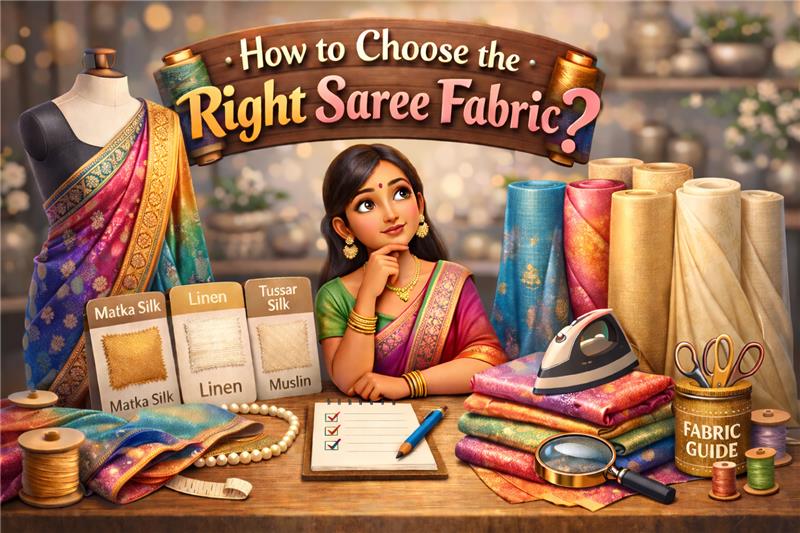
|
Getting your Trinity Audio player ready... |
The experience of many women wearing sarees comes in two forms. The first time you drape a saree at home, it looks stunning. But after an hour or sometimes a few hours, it feels heavy or sticky. After spending time in the saree, many women are typically ready to take off their saree and put on something more comfortable.
Generally, the reason for this sensation isn’t due to the style of the saree you chose; it’s because of the type of fabric you chose.
India’s climate has various layers and changeability to it. Summer months can be sweltering and incredibly humid, the monsoon season is accompanied by dampness, and then you also have winters where temperatures vary greatly depending on the region. And even during transitional times, temperature can shift drastically within a mere 24-hour period. Thus, understanding the types of fabrics available and how they will feel on your body is not a matter of fashion rules. Rather, it is a matter of finding what works for you.

This guide is meant for all Indian women, regardless of age or lifestyle, whether they’ll wear a saree to work, at home, while travelling, or in celebration of an event. The highlight of this guide will be helping you determine which saree fabric works best based on the Indian Seasonal Calendar; allowing you to choose a saree fabric that offers both style and comfort.
Why Fabric Matters More Than Saree Design?
The majority of women tend to focus on the colour, border, or print of sarees when shopping for them. While these factors can be very important, the actual fabric of the saree dictates how the saree will perform when worn.
There are many ways the fabric will affect how you wear the saree.
The fabric plays a large role in:
- How much heat you retain while wearing the saree
- Whether the saree provides a clingy or breathable quality
- The ease of walking, sitting, moving in the saree
- The feel of the saree after hours of wear
While both sarees may look very elegant, one may seem effortless, while the other may seem tiring. Through experience, those who frequently wear sarees learn that comfort begins with the fabric, not what’s in fashion or what is the latest saree design.
Understanding Indian Seasons Before Choosing Saree Fabrics:
The Indian climate is not uniform. A woman in Chennai has a completely different experience when wearing a saree than a woman in Delhi or Jaipur. However, many saree selections can be divided into four seasons for ease of classification.
Summer:
Summer is characterized by high heat, humidity, and perspiration; therefore, the foremost consideration in purchasing sarees during this time is breathability.
Mosoon:
During the monsoon season, there is a significant amount of precipitation, and the air is humid, resulting in very sticky conditions for those wearing sarees. Thus, the need to choose saree fabrics that will dry out quickly after getting wet or damp and will not lose their form.
Winter:
The winter months provide cooler temperatures and the opportunity to wear thicker and more textured saree fabrics, particularly in the northern part of the country.
Transitional Seasons:
Spring and autumn are overlapping weather; therefore, the sarees selected should be able to adapt to both warm and cold weather conditions.
To make the appropriate fabric choice, it is best to first understand how your body will respond to each of the changing seasons.

Summer Saree Fabrics That Truly Feel Comfortable:
What Must Summer Sarees Achieve?
Summer sarees should be breathable to allow the air to flow freely, absorb moisture and stay light on the skin. If the fabric retains heat, it will be uncomfortable to wear, no matter how appealing it may appear aesthetically.
Muslin Saree:
A pure muslin saree is one of the most summer-friendly fabrics available. It’s extremely fine and lightweight, which makes it an excellent choice for keeping cool in hot weather; therefore, many users report that muslin feels almost like air when worn.
Muslin is ideal for:
- Wearing all day long in the winter
- People who sweat profusely
- Areas with extreme heat and humidity
Due to its lightweight comfort, pure muslin sarees can drape nicely on the body and lend themselves well to simple yet elegant saree designs.
When looking for a comfort-based piece and one that speaks of craftsmanship, muslin jamdani saree is an ideal choice when you want something with a lot of character and without the bulk of an overly detailed sari.
Muslin Jamdani Saree:
Muslin jamdani sarees are great for:
- Day events
- Cultural events
- Women looking for understated elegance
Linen Saree:
Linen sarees have been increasingly favored for daily and workwear usage. They absorb moisture easily and dry more quickly than most other common materials. While initially, linen may feel a little crisp, it becomes more supple the more you wear it. Linen makes a great choice for:
- Office wear
- Travel
- Structured, modern sari styles.
Those who want a polished appearance but also want comfort and coolness in summer should definitely consider linen as an option for their summer.

Choosing Saree Fabrics That Work During Monsoon:
Why Monsoon Saree Dressing Is Tricky?
In the monsoon season, the way different fabric behaves is dramatically different. Some fabrics feel heavy while others feel clingy; then, there are those fabrics that will simply lose their shape. As such, if you choose a bad fabric when wearing your saree in monsoon conditions, you’re going to have a tough time making it work!
Linen Saree in Monsoon:
Linen is a wonderful fabric choice when it comes to the monsoon season as it is not as clingy to the body and will keep its shape even in high humidity. This allows for daily wear when the potential for rain is high.
Women who travel or work out of the home tend to opt for linen during monsoon months due to how easy it is to maintain.
Tussar Silk Sarees in Monsoon:
Tussar silk sarees give you a great option for monsoon when compared to other heavier silk varieties. The natural surfaces provide natural airflow, so Tussar silk saree will not feel as stuffy as heavier silk does when exposed to a damp environment.
Tussar silk is perfect for the following occasions:
- Small celebrations or small festivities at home
- Corporate/office-related events
- Occasions where silk is expected but comfort matters
Events where silk is expected. Silk is often anticipated, however, comfort should always be taken into consideration.
Monsoon weather makes fabrics behave differently. Some become heavy, some cling, and others lose their shape entirely. Choosing the wrong fabric during this season can make saree wearing frustrating.
Winter Saree Fabrics That Add Warmth Without Discomfort:
How Winter Changes the Sarees Women Choose:
The texture and color options for sarees worn in winter are richer and deeper than those worn in the summer. Some fabrics that felt heavy and uncomfortable in the summer are now cozy and warm in the winter.
Matka Silk Saree:
The matka silk saree has a rougher texture, so it feels handmade. Although it has some weight to it, it is a good warm fabric. Most women prefer the matka silk saris because they are much more comfortable than non-matka silks when worn for an extended period of time.
Who wears it?
- Weddings during winter
- Evening functions
- Traditional saree patterns
Tussar Silk sarees:
Tussar silk has a more substantial weave, which makes them an excellent choice for winter. They provide warmth and elegance, but they also provide flexibility and comfort. As a result, tussar silk has become popular for all age groups.

Transitional Seasons and Flexible Saree Fabrics:
The uncertainty of the season makes it difficult to determine what sarees to wear during spring and fall because in the daytime it can feel chilly and hot at night.
- Daytime sarees: a pure muslin saree
- Evenings sarees: a muslin jamdani sari
- Long days sarees: a linen sari
Since all three of these fabrics change to adapt to temperature changes, you’ll have a dependable choice for both spring and summer seasons.
How Fabric Influences Saree Drape and Body Comfort?
The way that a saree will flow with the body will be determined by the fabric that is used to create the sari. Lightweight saree fabrics will drape easily and appear fluid when worn, whereas textured saree fabrics will create an element of structure for the wearer.
Here are some of the main factors to consider when choosing a fabric for your saree:
– The weight of the fabric
– The way that the fabric feels on the skin (soft vs rational)
– How easy it is to throw the saree in pleats and drape it in a way that looks graceful.
When you choose the right fabric for your saree, it is possible to make a simple saree also look beautiful with the right fabric.
Traditional and Modern Saree Fabrics in Today’s Wardrobe
Women from India frequently blend their cultural tradition with their modern-day lifestyle. When it comes to traditional fabrics, there are:
1) Matka Silk, for its artisan appeal – often used in handicrafts
2) Tussar Silk builds upon its rich natural fiber.
3) Jamdani Muslin is associated with a heritage & clothing value.
4) Linen Sarees are worn more in an everyday or casual manner.
5) Pure Muslin Sarees provide comfort when worn in style.
A thoughtful wardrobe contains both types of attire.
Common Mistakes Women Make While Choosing Saree Fabrics
When it comes to wearable textiles, people often overlook numerous mistakes. Some examples include using heavier materials in higher humidity conditions, focusing on current fashions instead of comfort, not taking care of the materials as they require, and not thinking about how long one will wear them. Preventing these mistakes can improve the positive experience of wearing a saree.
Seasonal Saree Fabric Summary:
- Summer: Pure muslin saree, muslin jamdani saree, linen saree
- Monsoon: Linen saree, tussar silk sarees
- Winter: Matka silk saree, tussar silk sarees

Conclusion: Let Comfort Guide Your Saree Choices
A saree does not have to be heavy and cumbersome; but when the correct fabric is selected, they can be easy, graceful, and give you confidence.
The best way for Indian women to enjoy wearing traditional and contemporary saree styles, comfortably, is by understanding the different types of saree fabrics available in India. The correct saree fabric will also be appropriate for the season and the wearer’s body type – making a saree feel like an extension of the personal style, rather than something to be tolerated.
FAQ’s:
Sarees made from lightweight and breathable fabrics are best for summer. A pure muslin saree or a linen saree are two very popular choices as these breathable materials promote airflow and provide comfort during times of extreme heat and humidity.
Muslin often feels lighter than cotton and does not cling to the skin as much. A muslin jamdani saree offers both comfort and elegance for long summer wear.
Yes, linen sarees are suitable for the monsoon as they dry faster and retain their shape better than many traditional fabrics.
Matka silk saree and tussar silk sarees are well suited for winter because its warm without feeling too heavy.
For long wear, focus on breathable saree fabrics that drape easily. Muslin, linen, and lighter silks are more comfortable than heavy or tightly woven materials.