
|
Getting your Trinity Audio player ready...
|
In this article, we’ll walk you through the basics of SEO for Real Estate Business, so that you can start seeing results from your online marketing efforts. We’ll also show you how to integrate social media with SEO for even better results.
If you’re a real estate business owner, then you know that online marketing is essential for your success. And while there are numerous ways to market your business online, SEO is one of the most effective.
SEO involves optimizing your website and content for the search engines, so that you can rank higher in the search results and attract more visitors. And when it comes to real estate, there’s no better way to target potential buyers than with localized keywords and phrases.

Real Estate Phrase Optimization: Using SEO Tips and Strategies
SEO is the process of optimizing your website and content for search engines in order to rank higher in search results and attract more visitors. And when it comes to real estate, there’s no better way to target potential buyers than with localized keywords and phrases.
As a real estate business, it’s important to make sure your website is optimized for search engines. By using SEO tips and strategies, you can help improve your website’s ranking and visibility. This can lead to more traffic and leads for your business. Some SEO tips for real estate businesses include optimizing your website for relevant keywords, creating quality content, and building backlinks. By following these tips, you can help your real estate business succeed online.
How to Begin an Effective SEO Strategy in Real Estate
So, the core question is, do you really need SEO? how to do SEO and How it Works?
We’re only going to look at the industry value today. The decision to pay any sort of amount of money to your web designer for content is purely a personal decision.
If you want to improve sales, contents must be present on the page.
What matters is how much effort your page will take to make and the cost. If you, for example, need four main copywriters, how good you will rank for that article?
What you do define how much effort you put into looking for copywriters.
In an extreme example, I would specify that anyone can work with me. In the extreme case of $2.5k every month for four writers, we should anticipate that nine in ten people can’t do it.
Saves money on currency that is invested.
If somebody doesn’t care, that’s self-acclimation by a human for a human and is a very humanistic cost. I mean, if I would send it to $0.99, I would expect either people would click them because: “Oh! SEO for free ls cool!”
And other sites go up. Conversely, if it’s $23k a year for five writers, then I expect very few people can write. You may not, either.
Anything over three is very high value. I can say average value to $1k-$2k per month.
How to do SEO for Real Estate?
Retailor are often wary of SEO because they equate it to spammed or sneaky. They mistakenly think that SEO is a manipulative practice that only large businesses can afford to buy.
In reality, the same basic principles can be applied to optimize your real estate web presence.
When you optimize a web page, you make major changes to specific properties such as the title tag, meta descriptions, content, and formatting. The goal immediately gets to the search engine. Content and article keywords are written on the page to target specific browser searches.
And for smaller real estate agents and professionals, there are ways to push through the competition without going over the top.
Best Practices to Implement SEO for Real Estate Business
To realize your SEO requires expertise and knowledge, what works best for the search engines needs variety of approaches and support. Only a complete picture can show you the actual situation of website outside of their basic settings.
Today, SEO strategies for optimization, keywords, content and backlinks had changed. The best practices in SEO have changed a lot.
These strategies needed to be supplemented with advanced metrics, such as potential, content distribution, website and reputation analytics, etc.
New techniques can differ from one website to another, as is the case with marketing strategies. If you design content and keywords that will suit your pages, readers will always judge your content and business by the quality of the content and services.
How to do keyword Research for Real Estate Business?
The Best Real Estate SEO keywords for 2026 are not those that you think of today. Google has changed its algorithm so often that it is hard to keep up with what will rank well in 2026.
Therefore, it becomes necessary to have a look at the latest trends and changes in Google’s algorithm and then make decisions accordingly. This article will help you understand how to do that.
Benefits of SEO for Real Estate Business
Search Engine Optimization is the process of enhancing the visibility of a website or a web page in a search engine’s unpaid results often referred to as “natural,” “organic,” or “earned” results.
SEO for real estate is an important part of any marketing strategy. It’s the best way to reach potential clients and sell your properties.
SEO for real estate can be done in many ways, such as implementing social media marketing, blogging, and creating videos.
The benefits of SEO for real estate are numerous: increased traffic, more leads, higher conversion rates, lower cost per lead, better search engine rankings, and better customer satisfaction.
Optimizing your Business for Local Search
Local search is always a priority. But it can be difficult to sell your home if you’re not local. In this case, a dedicated real estate website is the best option for most people, which can help convert your passive home seekers into eager buyers.
Most of the real estate sites are already optimized on Google Local, but there’s still a lot more you can do to boost your page’s ranking. The town, county and state pages reflect the location of your listing, and everything else is focused on your property.
When you can’t rank your town, county or state pages, it’s a good idea to optimize the individual pages still try to get as much vertical content and photos in place to help with SEO. Having exactly the right images listings is so important in helping increase your page’s ranking.
Content Marketing for Real Estate Business
If you’re a real estate agent, you know that online marketing is essential to your success. But what many agents don’t realize is that search engine optimization (SEO) should be the foundation of your online marketing efforts.
By optimizing your website and content for keywords and phrases relevant to your target market, you can attract more buyers and sellers to your business. In this article, we’ll give you a crash course in SEO for real estate agents, as well as some tips and strategies for optimizing your website, content, and social media.
Pivot to Hyper-Local Real Estate SEO Content Hubs
For years, standard advice was to create pages for “Homes for sale in [City Name].” That’s no longer enough. The 2026 searcher isn’t just looking for a city; they are investigating specific neighborhoods, school catchment areas, and even individual street vibes.
Google wants to serve the most relevant result. A generic city page cannot compete with a deeply informative guide to a specific subdivision.
How to Optimize for 2026:
- Create Neighborhood Guides: Don’t just list properties. Write comprehensive guides for specific neighborhoods that include information on local coffee shops, parks, school ratings, and community events.
- Become the “Local Mayor”: Use your blog to interview local business owners or cover hyper-local news. This signals to Google that you are deeply embedded in the community you serve.
Target Long-Tail Keywords for Realtors in AI Search
By 2026, AI-driven search results will be the norm. Users are moving away from typing “realtor [city]” and toward asking complex, conversational questions like: “What are the best neighborhoods in Austin for young families looking for mid-century modern homes near good elementary schools?”
If your content can answer that complex question directly, AI is more likely to pull your information into its summary snippet.
How to Optimize for 2026:
- Identify Question-Based Keywords: Use tools like AnswerThePublic to find the exact questions buyers and sellers are asking. Create FAQ pages that answer these clearly and concisely.
- Write Navigationally: Structure your content clearly with headings that act as direct answers to potential queries. Make it easy for a machine to parse your expertise.
Adopt a Video-First Real Estate Marketing Strategy
Real estate is inherently visual. Yet, many agents still rely solely on static images. In 2026, video is not an “add-on”; it is a primary ranking signal. YouTube is the second largest search engine in the world, and Google increasingly prioritizes video content in main search results (SERPs).
Furthermore, short-form video (TikTok, Reels, YouTube Shorts) is how the next generation of homebuyers discovers areas.
How to Optimize for 2026:
- Optimize YouTube SEO: Treat YouTube like Google. Use keyword-rich titles for your property tours, write detailed descriptions with timestamps, and include local keywords in your video tags.
- Neighborhood Video Tours: Create evergreen video content touring neighborhoods, not just specific houses that will sell next week. Embed these videos in your hyper-local content hubs.
Boost Realtor E-E-A-T Signals (Experience is Key)
Google’s ranking framework, E-A-T (Expertise, Authoritativeness, Trustworthiness), recently added an extra ‘E’ for Experience.
This is massive for real estate SEO. AI can generate generic advice about buying a home. AI cannot generate the firsthand experience of an agent who has negotiated fifty deals in a specific zip code during a volatile market. Your unique experience is your best defense against generic AI content.
How to Optimize for 2026:
- Showcase Case Studies: Don’t just post “Just Sold” graphics. Write blog posts detailing how you sold a difficult property, the challenges faced, and the specific strategies you used.
- Author Bios matter: Ensure every article on your site has a robust author bio detailing your years in business, certifications, and local market experience.
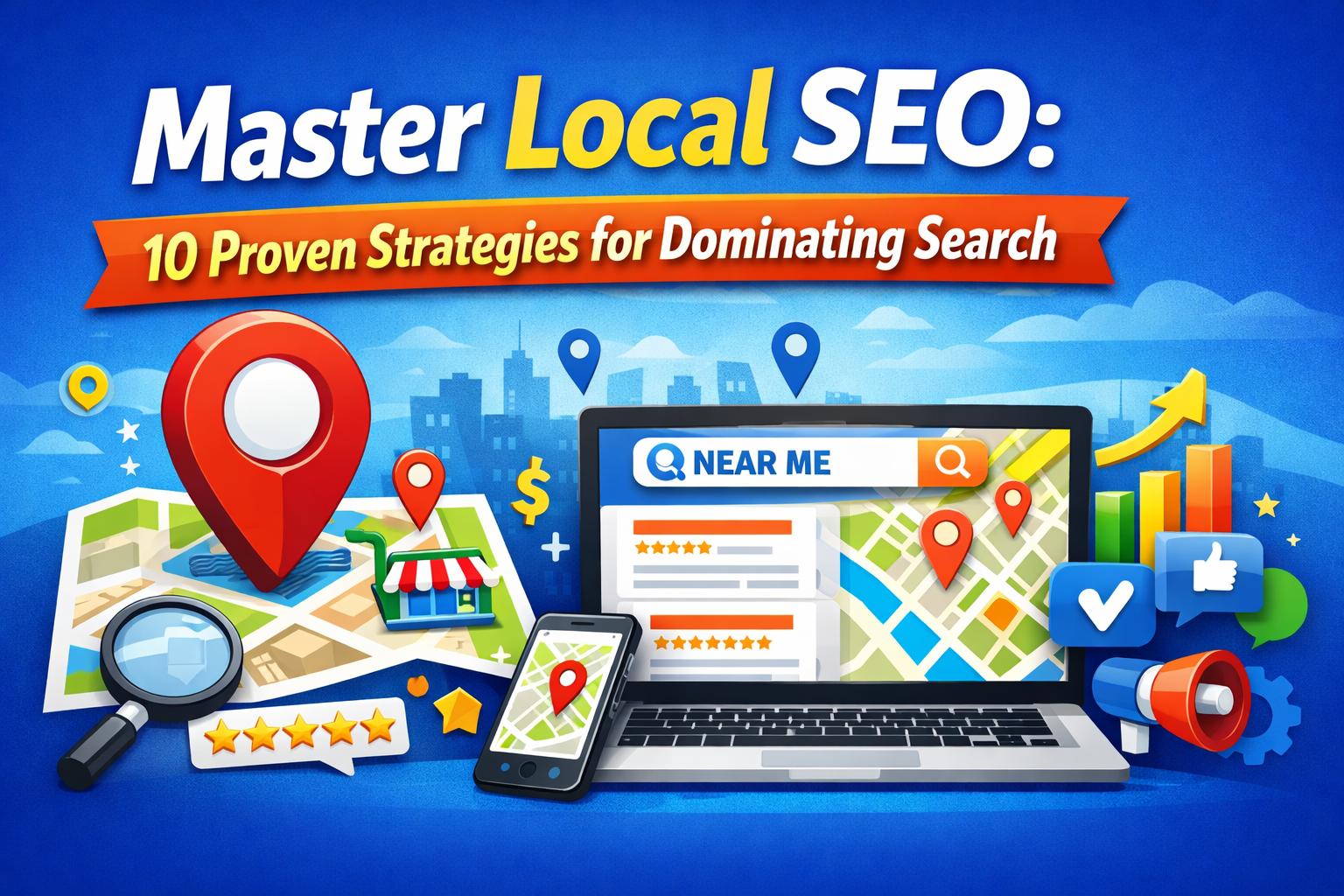
Master Local SEO with Your Google Business Profile
Your Google Business Profile (formerly Google My Business) remains the single most important factor for showing up in the “Local Pack” (the map and three listings at the top of search results).
By 2026, GBP will likely be even more integrated with transactional features and visual search. It is your digital storefront.
How to Optimize for 2026:
- Review Velocity and Depth: You need a steady stream of new reviews. Encourage clients to mention specific details in reviews (e.g., “Sarah helped us navigate the competitive Brentwood market…”). These keywords in reviews matter.
- Utilize GBP Posts & Q&A: Treat your profile like a social media feed. Post updates about market trends regularly, and actively seed and answer questions in the Q&A section.
Prioritize Mobile Speed on Your Real Estate Website
Real estate websites are notoriously heavy. They are loaded with high-resolution photo galleries, IDX feeds, and interactive maps. If your site takes more than 3 seconds to load on a mobile device in 2026, you have already lost the lead.
Google’s “Core Web Vitals” metrics, which measure loading speed, interactivity, and visual stability, are crucial ranking factors. A slow site tells Google you provide a poor user experience.
How to Optimize for 2026:
- Aggressive Image Compression: Use next-gen image formats (like WebP) and lazy-loading plugins so images only load as the user scrolls down to them.
- Evaluate Your Hosting/Platform: If you are using an outdated WordPress theme or a budget hosting provider, it’s time to upgrade to a performance-focused real estate platform.
Leverage Schema Markup for Real Estate Listings
Schema markup is code on your website that helps search engines understand exactly what your content is. It’s the difference between Google seeing a random page of numbers and text, and seeing a “3-bedroom, 2-bath Single Family Home in Denver priced at $650k.”
As search becomes more AI-driven, structured data is the language that helps machines categorize your listings accurately.
How to Optimize for 2026:
- Implement
RealEstateListingSchema: Ensure your developer or website provider has applied the correct Schema.org markup to every property page. This increases the chances of your listings appearing in “rich snippets” (enhanced search results with photos and prices). - Use FAQ Schema: Apply FAQ schema to your Q&A pages so Google can pull those answers directly onto the search results page.
Conclusion: The Long Game
SEO for real estate in 2026 isn’t about tricking the algorithm; it’s about providing the best possible digital experience for someone making the biggest financial decision of their life.
By focusing on hyper-local expertise, embracing video, and optimizing for the new AI-driven search reality, you won’t just survive the next few years—you’ll dominate your market. Start building your 2026 foundation today.


3 thoughts on “SEO for Real Estate Business : 7 Effective Ways to Optimize in 2026”