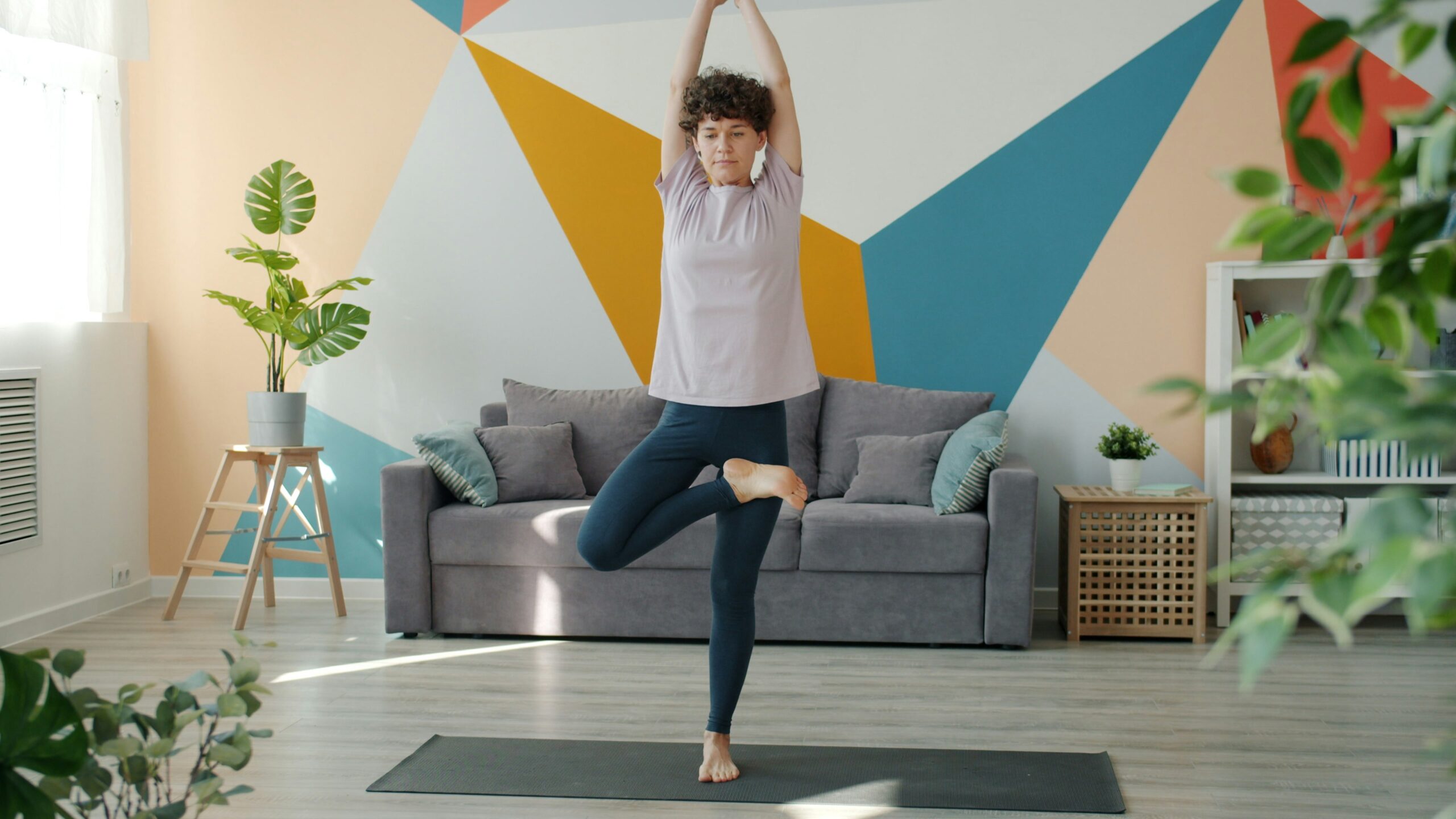
Got trouble switching off at night? You’re not alone. Many people find their minds racing when they should be drifting to sleep. The good news is that a simple yoga routine right there in your bedroom can make a real difference. Bedtime yoga isn’t about fancy poses or working up a sweat; it’s about gentle movements and mindful breathing to ease your body and mind into a state of rest. We’ll look at how a few well-chosen poses and breathing exercises can help you finally unwind and get that better night’s sleep you deserve.
Why Bedtime Yoga Actually Works
So, what’s the magic behind rolling out your yoga mat (or just clearing a space on your floor) before bed? It boils down to a few key things:
Releasing Physical Tension
Throughout the day, we accumulate a lot of physical tension, often without even realizing it. Think about that hunch you get over your keyboard, or the stiffness in your neck after staring at your phone. Bedtime yoga targets these common areas, gently coaxing them to relax. This physical release signals to your body that it’s time to wind down.
Slowing Down Your Breath
One of the cornerstones of yoga is focused breathing. For bedtime yoga, this means concentrating on slow, deep breaths. When we’re stressed or anxious, our breath tends to be shallow and rapid. By consciously slowing it down – aiming for about 3 to 6 breaths per minute, as some research suggests – we activate our parasympathetic nervous system. This is the “rest and digest” part of our system, directly counteracting the “fight or flight” response that keeps us awake.
Calming the Mind
It’s not just about the body. The gentle focus on movement and breath in yoga helps to quiet the mental chatter. Instead of dwelling on your to-do list or replaying conversations, you’re brought back to the present moment, to the sensation of your breath entering and leaving your body. This mindful approach is incredibly effective at reducing the anxiety that often sabotages sleep.
Creating a Bedtime Ritual
Consistency is key for good sleep hygiene. Incorporating a short yoga sequence into your nightly routine can become a powerful cue for your brain that it’s time to prepare for sleep. This ritual helps to separate your awake time from your sleep time, making the transition smoother.
Bedtime yoga is a wonderful practice that can help improve sleep quality and promote relaxation before heading to bed. For those interested in exploring more about the benefits of yoga and how it can enhance your overall well-being, you might find this related article on marketing automation interesting. It discusses how various wellness practices, including yoga, can be integrated into daily routines to boost productivity and mental clarity. You can read more about it here: related article.
Gentle Poses to Get You Started
You don’t need to be a yogi to do these. The idea is to keep it simple and soothing. Think about movements that feel good and help you release, rather than challenge yourself.
Poses for Your Shoulders and Neck
A lot of our daily stress lodges itself right in our upper body. These simple moves can help melt that tension away.
Thread the Needle
- How-to: Start on your hands and knees. Bring your right hand forward, then thread your right arm under your chest, palm facing up, until your shoulder and the side of your head rest on the floor. Your left hand can stay where it is, or walk a little forward for a deeper stretch. Hold for 5-10 breaths, then repeat on the other side.
- Why it helps: This opens up the shoulder blade area and gently twists the upper spine, releasing tension accumulated from hunching or repetitive motions.
Gentle Neck Rolls
- How-to: While seated or lying down, gently drop your chin towards your chest. Slowly roll your right ear towards your right shoulder, then back to center, and then your left ear towards your left shoulder. Move very slowly and only go as far as is comfortable. Avoid rolling your head all the way back.
- Why it helps: This is incredibly simple but effective for loosening up the tight muscles at the back and sides of your neck, which often contribute to headaches and sleep disturbances.
Poses for Your Hips and Lower Back
These areas can hold surprisingly deep tension. Releasing them can lead to a feeling of overall relaxation.
Child’s Pose (Balasana)
- How-to: Kneel on the floor, bringing your big toes to touch and your knees hip-width apart or wider. Gently fold your torso forward, resting your forehead on the mat. Your arms can be stretched out in front of you or rested alongside your body.
- Why it helps: This is a classic resting pose that gently stretches the hips, thighs, and ankles while relieving back strain. It’s incredibly grounding and calming.
Knee-to-Chest Pose (Apanasana)
- How-to: Lie on your back. Bring your right knee towards your chest, hugging it gently with your hands. Keep your left leg extended or bent with your foot on the floor. Hold for several breaths, then switch legs.
- Why it helps: This pose is great for releasing tension in the lower back and hips. It also gently massages the abdominal organs. You can even bring both knees to your chest for a deeper release.
Supine Spinal Twist
- How-to: Lie on your back with your knees bent and feet flat on the floor. Extend your arms out to the sides at shoulder level. Gently drop your knees to one side, keeping your shoulders grounded. Turn your head to look in the opposite direction. Hold for 5-10 breaths, then return to center and repeat on the other side.
- Why it helps: This pose is fantastic for releasing tension in the spine and hips. The gentle twist can feel very releasing and helps to calm the nervous system.
Breathing Techniques for Deep Relaxation
Your breath is your most powerful tool for winding down. Focusing on your breath can shift you from a state of alertness to one of calm.
Diaphragmatic Belly Breathing
This is the foundation of many relaxation techniques.
- How-to: Lie on your back comfortably. Place one hand on your chest and the other on your belly, just below your rib cage. As you inhale, try to push your belly out, so your hand on your belly rises. Your chest hand should remain relatively still. As you exhale, let your belly fall.
- Why it helps: This is a more efficient way to breathe and directly stimulates the vagus nerve, which is key to activating the parasympathetic nervous system and promoting relaxation. Many guided bedtime routines, like the 18-minute “Bedtime Wind-Down Yoga for Deep Sleep” YouTube video, emphasize this type of breathing toward the end to encourage rest.[2]
Box Breathing (Sama Vritti)
This technique can be very grounding and help to regulate your nervous system.
- How-to: Inhale for a count of 4, hold your breath for a count of 4, exhale for a count of 4, and hold your empty lungs for a count of 4. Repeat this cycle for several minutes.
- Why it helps: The equal count for each part of the breath creates a sense of rhythm and control, which can be very soothing for an agitated mind. It’s a simple way to bring focus and calm.
Putting Together Your Bedtime Routine
You don’t need a long, elaborate session. Even 10-15 minutes can make a significant difference. Think about what feels best for your body and mind.
A Curated Sequence Example
Drawing inspiration from various sources, like therapist Judi Bar’s routine at the Cleveland Clinic for a 10-pose sequence aimed at muscle relaxation and improved breathing,[1] you can build a simple flow.
- Start with grounding: Begin by lying on your back in a comfortable position, perhaps with knees bent or legs extended. Take a few moments to just feel your body on the surface beneath you.
- Gentle stretches: Move into poses like the knee-to-chest (Apanasana) and then the supine spinal twist.
- Hip and back release: Try a gentle butterfly pose lying on your back with the soles of your feet together and knees falling outwards. You can place cushions under your knees for support. Alternatively, a simple forward fold lying on your back with knees bent can be soothing.
- Upper body focus: Incorporate thread the needle or a gentle shoulder roll.
- End with breathing: Finish by lying flat on your back, focusing on deep diaphragmatic belly breathing. This is a great way to wind down, similar to the concluding part of practices like the Bre Neidhammer’s “Breathe and Flow” series.[4]
In-Bed Options
If even getting out of bed feels like too much effort, you can adapt some poses to be done right on your mattress. Cornish Beds suggests several in-bed poses,[7] which are perfect for those nights when you just want to stay cocooned.
- Knee-to-Chest on the bed: Just as described for the floor, this works perfectly on your mattress.
- Gentle Cat-Cow on hands and knees in bed: If your mattress is firm enough, you can do a modified cat-cow.
- Supine Butterfly: Lying on your back, bring the soles of your feet together and let your knees fall open. You can use pillows under your knees or hips for support.
- Seated Forward Fold: Sit up in bed with your legs extended. Gently hinge forward from your hips, reaching for your shins or ankles. Don’t force it; a gentle stretch is the goal.
Bedtime yoga can be a wonderful way to unwind and prepare your body for a restful night’s sleep. Incorporating gentle stretches and mindful breathing into your evening routine can significantly improve your overall well-being. For those looking to enhance their nighttime relaxation, you might find this 7-minute evening stretching routine particularly beneficial, as it offers simple yet effective movements designed to release tension and promote tranquility before bed.
When to Practice and What to Expect
Timing and consistency are crucial for getting the most out of your bedtime yoga.
The Best Time to Practice
The most obvious time is right before you plan to go to sleep. Aim to do your routine about 30 minutes to an hour before you want to be asleep. This gives your body and mind time to transition from activity to rest. Avoid practicing right after a heavy meal, as this can be uncomfortable.
Consistency is Key
Like any habit, the benefits of bedtime yoga are amplified when practiced regularly. Trying to fit a longer YouTube video, like an 18-minute gentle no-mat practice,[2] into your evenings a few times a week can build up over time. Even a 5-minute stretching and breathing session nightly is better than nothing. The goal is to integrate it into your routine so it becomes a natural part of your wind-down process.
What to Expect
Don’t expect to fall asleep the moment you finish your first pose. The benefits are often subtle at first. You might notice:
- Reduced physical discomfort: Less stiffness in your neck, shoulders, or back.
- A calmer mind: Fewer racing thoughts as you lie in bed.
- Easier breathing: A sense of deepening your breath.
- Gradual improvement in sleep quality: Over time, you may find it easier to fall asleep and experience more restful sleep.
Remember that studies, like those discussed by Harvard expert Sat Bir Singh Khalsa, link yoga and slow breathing practices to improved sleep and reduced insomnia.[5][6] The general stress-relief benefits are widely acknowledged, making it a valuable tool for anyone struggling with sleep. The goal is progress, not perfection.
Addressing Common Worries and Tips
It’s natural to have questions or feel a bit hesitant. Here are some practical tips to make this work for you.
“I’m Not Flexible Enough!”
This is probably the most common concern, but it’s a non-issue when it comes to bedtime yoga. The point here isn’t to contort yourself into pretzel shapes. It’s about releasing. If a pose feels tight, that’s a sign you might need it, but you should never push into pain. Modify poses, use cushions for support, or simply skip a pose and focus on breath if it doesn’t feel right. The 12-minute evening yoga sessions from the “Breathe and Flow” series, for instance, are designed for full-body tension release without needing props, emphasizing accessibility.[4]
“I Don’t Have Time!”
If you’re struggling to find time, start small. Even 5 minutes of deep breathing or a few gentle stretches can make a difference. Think about where you can carve out those minutes – perhaps after brushing your teeth, or before you even get into bed. The key is integrating it into your existing routine rather than trying to add another large task.
“What If I Fall Asleep During the Poses?”
That’s actually the goal! If you find yourself drifting off during a pose, especially a resting one like Child’s Pose, that’s a sign your body is ready for sleep. Just gently transition to lying down and continue your breathwork. It’s all part of the unwinding process.
Using Props (Optional but Helpful)
While many bedtime yoga practices aim to be prop-free, don’t hesitate to use what you have.
- Pillows: For under your head, knees, or hips to provide support and comfort.
- Blankets: To add cushioning or warmth.
- Bolsters: If you have one, they are excellent for supporting the back or under the knees.
The goal is to create a comfortable, nurturing space for yourself, allowing your body to fully relax and let go.
FAQs
What is bedtime yoga?
Bedtime yoga is a gentle and relaxing yoga practice designed to help calm the mind and body in preparation for sleep. It typically involves slow, soothing movements and deep breathing exercises.
What are the benefits of bedtime yoga?
Bedtime yoga can help reduce stress and anxiety, improve flexibility and circulation, and promote relaxation. It can also help quiet the mind and prepare the body for a restful night’s sleep.
What are some common bedtime yoga poses?
Common bedtime yoga poses include Child’s Pose, Legs-Up-the-Wall Pose, Reclining Bound Angle Pose, and Corpse Pose. These poses are gentle and restorative, helping to release tension and promote relaxation.
When is the best time to practice bedtime yoga?
The best time to practice bedtime yoga is typically in the evening, about 30 minutes to an hour before bedtime. This allows the body to wind down and prepare for sleep.
Can anyone practice bedtime yoga?
Yes, bedtime yoga is suitable for people of all ages and fitness levels. It can be especially beneficial for those who struggle with insomnia, stress, or anxiety. However, it’s always a good idea to consult with a healthcare professional before starting any new exercise routine, especially if you have any underlying health concerns.